
Accessibility
Parking
Toilets
Access Cost
Geography
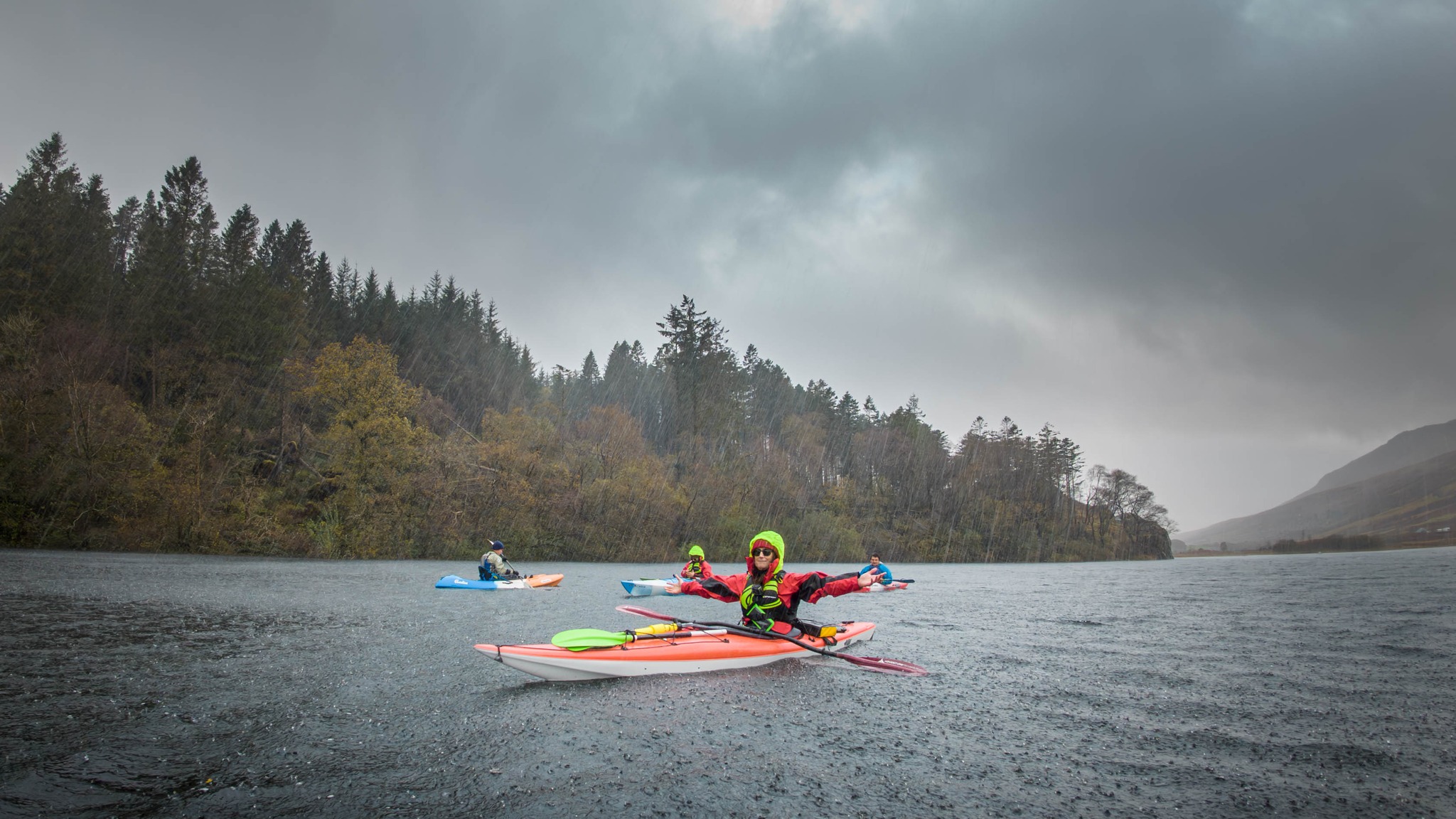
The geography at Llynnau Mymbyr feels dramatic and immediate. Unlike larger valley lakes such as Llyn Tegid, these are two smaller connected lakes (Llynnau) set in a classic glacial mountain landscape in the heart of Eryri (Snowdonia). To the south-east, rises the unmistakable pointed summit of Moel Siabod, standing alone and dominant, and to the north-west, you can see the rugged outlines of the Carneddau forming a broad, rolling backdrop.
Parking & Water Access:
Parking and water access at Llynnau Mymbyr were particularly difficult for us. The parking is free, which is great, and there are three choices. Each, has incrementally better access for disabled people.
Option 1: Park on the road. This is easy if there’s space, and you are at the perfect level to enter the Plas y Brenin Facility. From the road, it is possible to gain access to the lake, however it’s down a steep path, that we found would be impossible with two people, two kayaks, and one wheelchair.
Option 2: Park in the Plas y Brenin car park. This option is a lot better for water access, however it’s a small car park, with only a few small disabled bays. This can make access difficult, especially if it’s full. If you do manage to park here, you can access the water easily, however it does then make accessing the Plas y Brenin facilities more difficult (hills and stairs). The end of the car park has a huge gravel area, which parking is not allowed in (they turn their vehicles and trailers around here). Parking here is free, as long as you use their café.
Option 3: Plas y Brenin forest track. This option is by far the easiest for access to the water for physically disabled people. Plas y Brenin use a coded gate, that has its entrance around near Café Siabod. Once you have a code to the gate, you can wind your way through the forest, to right alongside the lake, where you can launch very easily. They even have a superb small pontoon, with specific equipment for disabled people to be able to board their kayaks, and launch easily.
With this last option, however, we found the forest track on Google, and called Plas y Brenin to ask for the code to the gate. Despite explaining we have a wheelchair user, reception would not give us the code to the gate for the forest track. It took us to attend with an organisation and a group, for us to have access here.
We understand there’s difficulty with the amount of parking, and that they need as much space as possible on their forest track, and in their turning area, however we think they could handle requests from disabled people wanting to use the lake, a little better.
Weather & Water
North Wales’ lakes are beautiful places for kayaking, canoeing, and paddle boarding. All are framed by mountains, quiet in the early morning and inviting on calm days. However, they are also inland waters that can turn quickly from tranquil to challenging when the wind picks up.
Even moderate wind over an open lake can generate chop and waves. On larger lakes with long fetch (the distance over which the wind blows uninterrupted), small breezes can grow into significant surface waves that make paddling harder, tiring and potentially unsafe, especially if you’re blown across the lake rather than along the shore.
What This Means for Your Trip:
• Always check the local weather forecast and wind warnings before setting out. A yellow wind warning from the Met Office over North Wales can mean strong and gusty conditions that affect inland waters as well as coastal areas.
• Be cautious when the breeze exceeds ~Force 3–4 (10–20 mph), as this range is where lakes tend to go from smooth to choppy and tiring. (check out our wind scale at the bottom of this page).
• Know your ability and gear. Inexperienced paddlers should stay in sheltered bays and close to shore where winds have less fetch. Advanced paddlers with experience in dynamic conditions may handle stronger wind, but should always have the skills to self-rescue, and the means to call for help if needed. Paddling with a group is also a good way to stay safe, along with making sure you have the right equipment for your adventure.
Wildlife
Llynnau Mymbyr offers sightings of various upland birds and waterfowl, including Canada geese, blackbirds, and blue tits. The surrounding area is home to red kites & red squirrels. The broader area is known for breeding other birds like little owls and long-eared owls. The area is part of the Snowdonia National Nature Reserve, supporting brown hares, foxes, and the rare, elusive pine marten.
Pollution
The pollution level of Llynnau Mymbyr can be checked on Dŵr Cymru’s Storm Overflow map.
Wind Speed Guide for Recreational Paddlers
| Wind Strength | Typical Conditions on Lakes | Notes |
|---|---|---|
| < ~10 mph Beaufort Scale 0-2 | Calm water, small ripples only | Generally safe and pleasant for most skill levels. |
| ~10–15 mph Beaufort Scale 3 | Larger wavelets and breaking crests | Novice paddlers may find conditions tiring; wind against your course increases effort. |
| ~15–20 mph Beaufort Scale 4-5 | Small to moderate waves | Conditions can become challenging or unsafe for less experienced paddlers. |
| 20 mph+ Beaufort Scale 5+ | Rough water, frequent white caps (White horses) | Not recommended for recreational kayaking or paddle boarding — risk of capsize or being blown off course. |
Discover more from Baileys Int' Wild
Subscribe to get the latest posts sent to your email.