
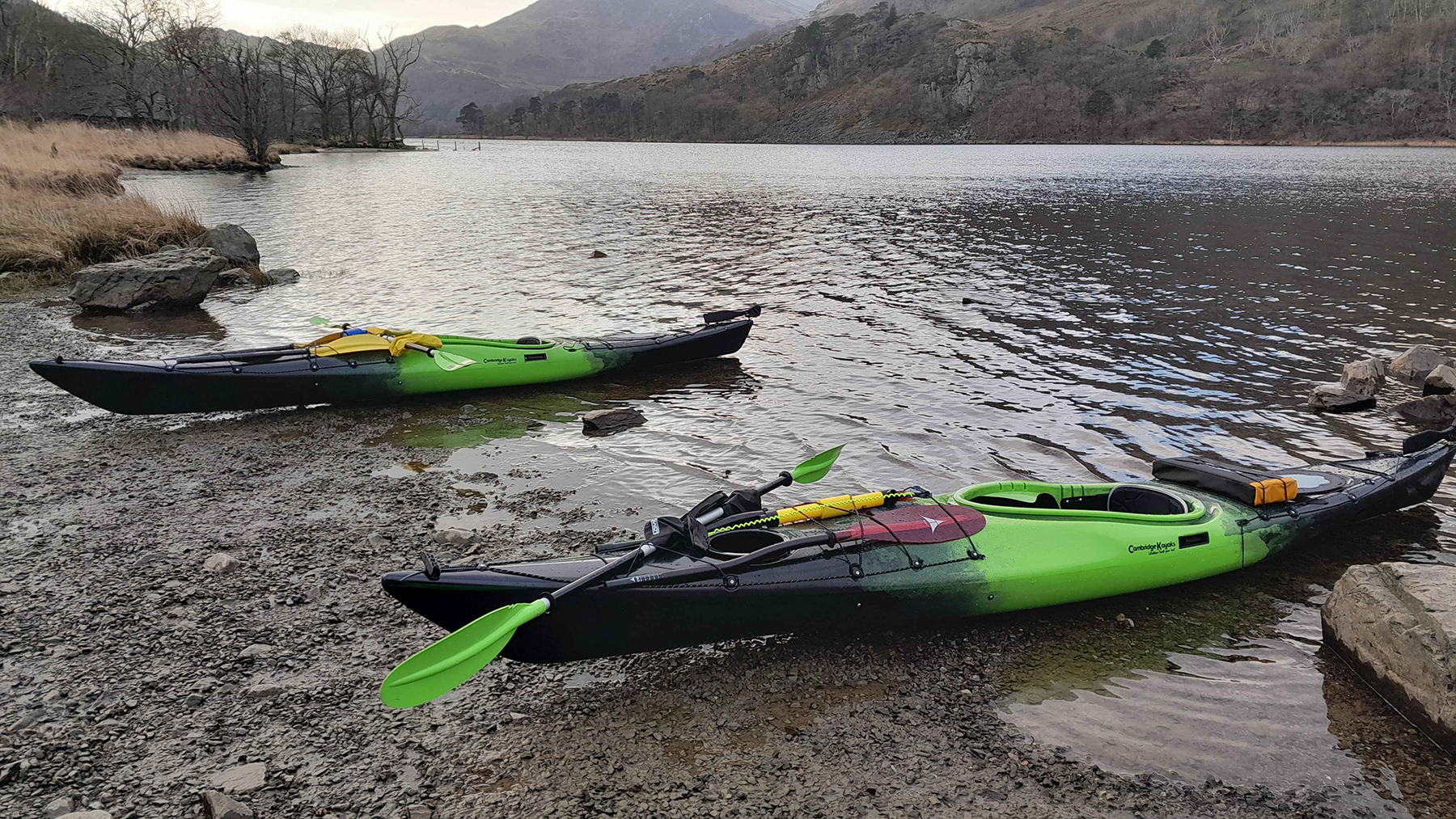
My mum and I have been canoeing/paddling for a while now, and we have truly fallen in love with the water, and being on it in any capacity. We are definitely ambitious women though, and we always love progressing in anything we do, so last year we traded our two-seater canoe for two sit in kayaks, mine being a Perception Arcadia, and Mum having a Pelican Sprint 120DT. They were great kayaks to start learning on, but over time, we started thinking we needed another step up. Something a bit longer than the 12ft kayaks we were paddling.
Sea Kayaks seemed like the obvious next step for us. I mean, it definitely helps that we fell in love with kayaking on the sea more than paddling on lakes, but we spent ages pondering if we should make the change or not. It took us months to even begin looking for what we might be interested in, and the price of some of the sea kayaks we were looking at were astounding. We spent months talking about it, researching it, and debating everything.
We then came across Cambridge Kayaks, who had some touring kayaks on sale. Naturally, we had many questions, and thankfully, the people at CK were incredibly friendly. They answered all the questions we had, and talked for us for probably much longer than is necessary to make a sale. They genuinely just wanted to make sure we had the right information that we needed, which was lovely.
They told us that even though we were looking for sea kayaks, that the touring kayaks we’d spotted, namely the Explorer 430 kayaks were perfect for what we were wanting to achieve. While not ‘technically’ sea kayaks, they are 14.1 inches long (430cm), which is just long enough to be considered as a sea kayak. 14 feet, is just past the threshold for sea kayaks so we’d be better sticking to within a few miles of coastal areas to be safe, but that works great for us as beginners to sea kayaking anyway (no doubt we’ll upgrade again someday).
After discussing it for what seemed like forever, we decided to just stump up the cash, and buy them. They were with us in just a few days. We both got green and black ones, as the red and black one Mum wanted was already out of stock. Not a problem since all of our outdoor gear seems to end up being bright green anyway, especially Mum’s. Plus, we match.
I don’t think we’d realised just how big they were going to be until they actually turned up. I tend to use my Mum as a unit of measurement, because she’s 6ft 1 inches, and her height is easy to picture in my head. One kayak is 2.3 my Mums long.
Its overall width is 63cm, and the cockpit is actually rather large (95cm x 49cm), which makes getting in and out of it nice and easy (especially underwater, we hope). The foot pegs have lots of adjustment in them too. It weighs 27kg, which is roughly half my overall weight, so for their size, they’re actually decently light. For safety reasons though, I would recommend having another person lift them with you, if you need to get them onto a vehicle for transport, because they tend to be awkward, and cumbersome to manoeuvre if you’re on your own. But that’s just like every other kayak, so no big deal. Pulling them along a beach or something on your own (on a trolley), however, is easy. Even if they’re filled with gear.
There are two large storage hatches, one on the front and one on the back. There is another smaller hatch directly in front of the cockpit, which makes storing quick access snacks, and an ‘ouch pouch’, much easier. There’s also plenty of space in the cockpit itself, and a small space behind the seat, which is great if you have personal items you’d prefer to keep close to you. That’s not even mentioning the amount of space/bungee cords on deck that you have to use. The bungee cords, are reflective, too.
The seat itself is also decently comfy, even if a little basic.
The one thing that sold them to us, though, were the double bulkheads, one right in front of where the cockpit ends and one right behind the seat, and with decently fitting hatch covers, too (making them water-tight). Our previous kayaks only had a single rear bulkhead each, which is generally normal for touring kayaks, putting these new 430s even more firmly in the sea kayak arena for us. A water-tight bulkhead is generally so that if your boat ends up swamped, by waves, or after being overturned, it will stay afloat.
Having just one bulkhead can make things more difficult, and in some ways more dangerous (imagine the boat flooded from the rear bulkhead, all the way forward, tipping downwards). Now, with two bulkheads, whatever happens, the boats will stay afloat, allowing us to self-rescue, and use as flotation aids, while we do (with only the cockpit flooding). As a result, we feel much safer kayaking in these now, and it was a primary factor in us hitting the buy button.
The kayaks also came with a paddle and a spray skirt each, which is great if you’re a beginner, and you don’t have the kit yet. I would recommend upgrading them though, if you are able. The paddle isn’t particularly big and even though it works great if you have no other option, there are definitely better ones out there with a much bigger surface area, that’ll make paddling a breeze. The spray skirt is also wonderful if you don’t have an alternative, but I would also recommend an upgrade here if possible. Especially if you’re going to be capsizing, wet-exiting, or rolling. Again, it works great if there isn’t any other option, but the skirt itself isn’t made out of a material we like using, and doesn’t seem like it will stop all the water from getting in, especially around your waist and toggles.
Two of the main features for the Explorer 430 kayaks are a retractable skeg, and a rudder. Again, in the realm of the sea kayak.
We tried the rudder once after we got them, and they worked really well. It was a little awkward at first, as we tried to figure it out but once we did, we were able to turn the kayak with ease, and it even helped with edging too. We didn’t buy the kayaks for this feature though, preferring boats without a rudder, so even though they worked great, we’re unlikely to use it again.
The skeg however, works wonderfully, and we have used it every time we’ve been out so far over the windy winter. It really does help when the weather and water get more turbulent, and it definitely works to keep us on track when the wind is blowing us about everywhere. Unfortunately, mine has had trouble deploying since I got it, and recently I think it stopped deploying altogether, which is a shame because I genuinely like the feature. We will have to speak to Cambridge kayaks about this.
That being said, they track incredibly well even without the skeg down. If I’m idle, I do find that the kayak starts turning without me doing anything at all. I’m never completely stationary, and have to correct myself a lot, even in calm water. When moving though, it’s really easy to get speed up, and I cut through the water with ease. The first time we tried them, we were shocked with how fast we were going without even expending that much energy, which for two disabled women, is wonderful. They also edge incredibly well, and as we’re just learning how to do this, with a view to more sea kayaking expeditions, this is great.
One more thing I will note, is that the Cambridge Kayak logo on my Mum’s kayak started rubbing off the same day we got them. Not a massive dealbreaker, but it was a little disappointing after the amount that had been spent on the pair of them.
To summarize, they feel expensive when you buy them, but they are probably on the far lower end of the sea kayak price bracket (yes, I know they’re ‘technically’ touring kayaks). They are a wonderful step up from what we had. They’re safer, have much more storage capacity than we used to have, and are a brilliant introduction for us to what actual sea kayaks will feel like. They’d work wonderfully as beginner kayaks, too, especially considering extra things are provided when you buy them.
We do adore them, and plan to spend a lot more time kayaking in them in the summer coming up. Mum and I have both named our kayaks, and so continuing with the Firefly/Serenity theme we have going on, we now have Inara Serra, and River Tam.
Cerys
EDIT: The rear handle snapped on Mum’s kayak, as it’s strapped around a sharp piece of metal on the back. We’ll be speaking directly to Cambridge Kayaks about these things.
Discover more from Baileys Int' Wild
Subscribe to get the latest posts sent to your email.