
Accessibility
Parking
Toilets
Access Cost
Geography
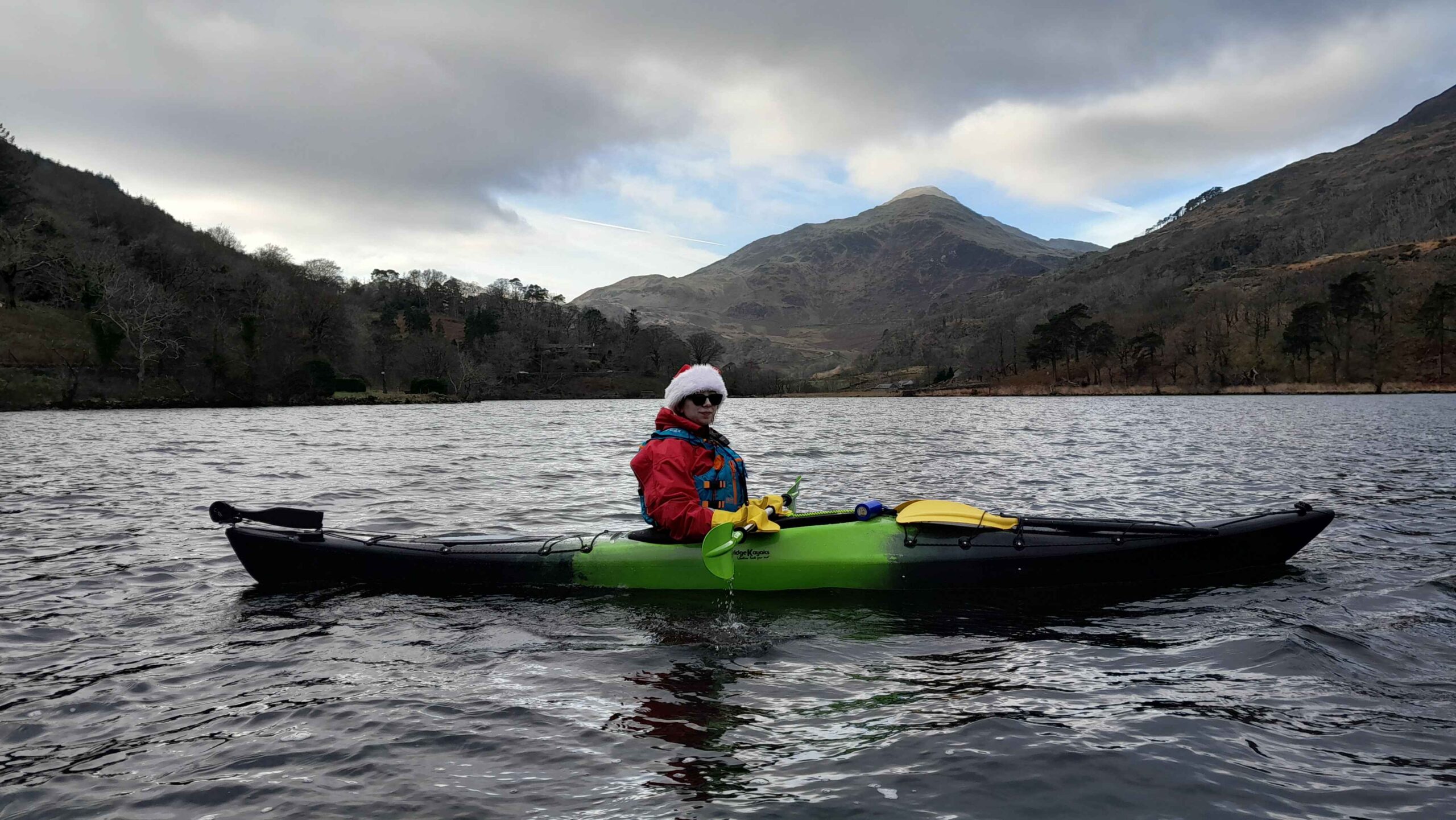
Llyn Gwynant is a lake in Eryri (Snowdonia), nestled in a classic U-shaped glacial valley. The geography around the lake is striking because the surrounding terrain rises steeply on both sides, creating a dramatic mountainous backdrop. To the west and north, you have the Snowdon Massif and peaks such as Moel Eilio and Moel Hebog. To the east, the valley slopes rise more gently but still frame the lake with hills like Cnicht, giving it a sense of enclosure.
Llyn Gwynant is fed primarily by small streams from the surrounding mountains and drains southeast into Llyn Dinas, which then connects to the River Glaslyn that eventually flows to the sea at Porthmadog.
Parking & Water Access:
Parking here is twofold. There’s parking at the Llyn Gwynant campsite, which is ample, however there is both a parking charge, and a charge to launch/booking fee of £5. They do, however, have a beech, and a small pontoon at the time of writing.
The other option, which we had to use, (as the campsite was closed for renovations over the winter we paddled here), are the laybys along the side of the lake. These are also owned by the campsite, and still have a small charge for launching onto Llyn Gwynant. It’s best to contact them by email (found on their website), if the campsite is closed.
From the layby, the access is a little more difficult for disabled people, however with support it’s very possible, and you’re parked mere metres from the water.
Weather & Water
North Wales’ lakes are beautiful places for kayaking, canoeing, and paddle boarding. All are framed by mountains, quiet in the early morning and inviting on calm days. However, they are also inland waters that can turn quickly from tranquil to challenging when the wind picks up.
Even moderate wind over an open lake can generate chop and waves. On larger lakes with long fetch (the distance over which the wind blows uninterrupted), small breezes can grow into significant surface waves that make paddling harder, tiring and potentially unsafe, especially if you’re blown across the lake rather than along the shore.
What This Means for Your Trip:
• Always check the local weather forecast and wind warnings before setting out. A yellow wind warning from the Met Office over North Wales can mean strong and gusty conditions that affect inland waters as well as coastal areas.
• Be cautious when the breeze exceeds ~Force 3–4 (10–20 mph), as this range is where lakes tend to go from smooth to choppy and tiring. (check out our wind scale at the bottom of this page).
• Know your ability and gear. Inexperienced paddlers should stay in sheltered bays and close to shore where winds have less fetch. Advanced paddlers with experience in dynamic conditions may handle stronger wind, but should always have the skills to self-rescue, and the means to call for help if needed. Paddling with a group is also a good way to stay safe, along with making sure you have the right equipment for your adventure.
Wildlife
Llyn Gwynant, is a biodiverse area, featuring wild brown trout in its waters. The surrounding woodlands and mountainous terrain are home to typical Welsh upland wildlife, including foxes, badgers, and various deer species. The lake acts as a scenic, natural habitat for birdlife and aquatic insects.
Pollution
The pollution level of Llyn Gwynant can be checked on Dŵr Cymru’s Storm Overflow map.
Mythology
The whole area is steeped in Arthurian legend, as it is close to Dinas Emerys, which is where King Vortigern attempted to build a castle only for the walls to keep falling. It’s where Merlin explained that it was due to the Red Dragon (representing Wales) and the White Dragon (representing the Saxons), fighting nearby.
Legend tells of a bat-winged, carnivorous creature that lived in Llyn Gwynant and Llyn Glas, that drags livestock and humans into the water. Local folklore also tells of a ghostly bride who disappeared on her wedding day during a game of hide-and-seek, only to be found months later by her groom, as a skeleton in a nearby, burned tree. Her husband died soon after and now the couple stroll along the beach together.
Wind Speed Guide for Recreational Paddlers
| Wind Strength | Typical Conditions on Lakes | Notes |
|---|---|---|
| < ~10 mph Beaufort Scale 0-2 | Calm water, small ripples only | Generally safe and pleasant for most skill levels. |
| ~10–15 mph Beaufort Scale 3 | Larger wavelets and breaking crests | Novice paddlers may find conditions tiring; wind against your course increases effort. |
| ~15–20 mph Beaufort Scale 4-5 | Small to moderate waves | Conditions can become challenging or unsafe for less experienced paddlers. |
| 20 mph+ Beaufort Scale 5+ | Rough water, frequent white caps (White horses) | Not recommended for recreational kayaking or paddle boarding — risk of capsize or being blown off course. |
Discover more from Baileys Int' Wild
Subscribe to get the latest posts sent to your email.