
Accessibility
Parking
Toilets
Access Cost
Geography
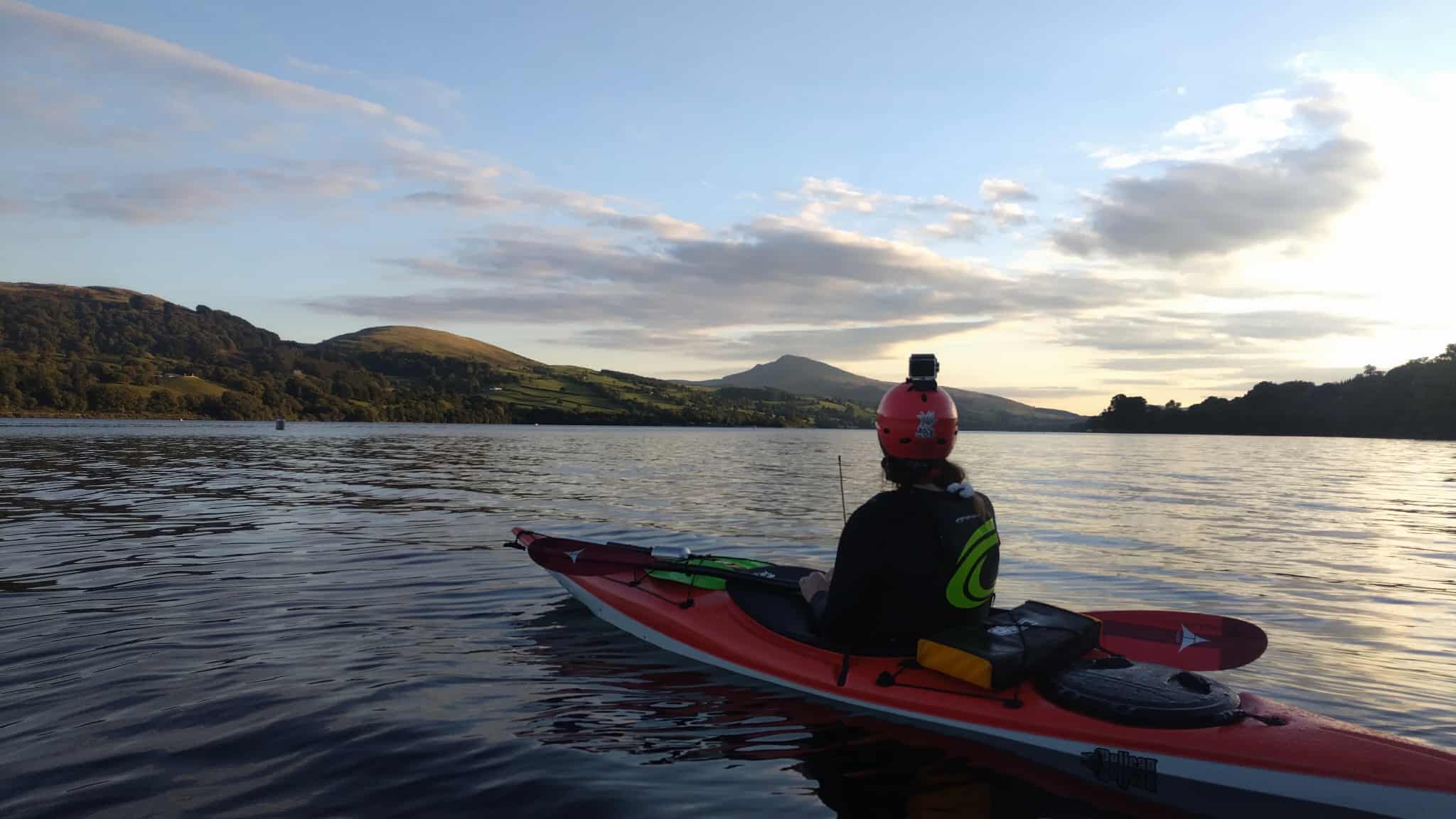
Llyn Tegid is the largest natural lake in Wales, stretching roughly 6 km (about 4 miles) from north-east to south-west. It was carved by glaciers during the last Ice Age. The lake sits in a broad trough with rising hills on either side. The valley alignment means wind can travel the full length of the lake, building waves when conditions are right. At the north-eastern end, you’ll see the town of Bala, sitting close to the shoreline. This is the outflow point of the lake, where the River Dee begins its journey eastwards towards Llangollen, and eventually the sea.
Parking & Water Access:
Parking at Llyn Tegid for us was comfortable. We went out of season, and there were plenty of parking spaces by the Ranger’s office. The car park was slightly rough, but navigable in a wheelchair. There are disabled spaces (which are free for blue badge holders). Access to the water in the main car park is over some grass, and then a slightly rocky beach. However, if you get there early enough, and turn onto a small track just right after entering the car park, you are able to use the slipway there, which makes access far easier.
Weather & Water
North Wales’ lakes are beautiful places for kayaking, canoeing, and paddle boarding. All are framed by mountains, quiet in the early morning and inviting on calm days. However, they are also inland waters that can turn quickly from tranquil to challenging when the wind picks up.
Even moderate wind over an open lake can generate chop and waves. On larger lakes with long fetch (the distance over which the wind blows uninterrupted), small breezes can grow into significant surface waves that make paddling harder, tiring and potentially unsafe, especially if you’re blown across the lake rather than along the shore.
What This Means for Your Trip:
• Always check the local weather forecast and wind warnings before setting out. A yellow wind warning from the Met Office over North Wales can mean strong and gusty conditions that affect inland waters as well as coastal areas.
• Be cautious when the breeze exceeds ~Force 3–4 (10–20 mph), as this range is where lakes tend to go from smooth to choppy and tiring. (check out our wind scale at the bottom of this page).
• Know your ability and gear. Inexperienced paddlers should stay in sheltered bays and close to shore where winds have less fetch. Advanced paddlers with experience in dynamic conditions may handle stronger wind, but should always have the skills to self-rescue, and the means to call for help if needed. Paddling with a group is also a good way to stay safe, along with making sure you have the right equipment for your adventure.
Wildlife
At Tegid, there are unique and rare fish, and other species, including the Gwyniad (a whitefish found only here) and the Glutinous Snail are the most specialised inhabitants. The lake also supports trout, pike, perch, roach, and eels. The lake environment also lends itself well to seeing otters, foxes, badgers, and birds of prey, like buzzards, ospreys and sparrowhawks.
Wetland birds like black-headed gulls, reed buntings, and sometimes red-necked grebes, can also be seen. The local river, (afon Tryweryn), also supports freshwater pearl muscles, and many diverse aquatic insects.
Pollution
The pollution level of Llyn Tegid can be checked on Dŵr Cymru’s Storm Overflow map.
Mythology
Llyn Tegid is said to hide a sunken town, deep below the lake’s surface, which is the result of a punishment intended for a greedy and cruel King, Tegid Foel (a giant). This is who the lake is named after. It is said that you can see lights underneath the surface on quiet, still, moonlit nights.
It is also reportedly the location of the myth of Ceridwen (the Goddess of Transformation), the powerful sorceress and goddess, who is said to mix wisdom, in her cauldron. Tegid Foel was her husband. Taliesin, a poet from the 6th century, is also said to have been born here.
There is also said to be a creature living in the lake, nicknamed Teggie. She is said to be more friendly than her Scottish counterpart, and is more often felt, rather than seen. The last sighting was in 1976.
Wind Speed Guide for Recreational Paddlers
| Wind Strength | Typical Conditions on Lakes | Notes |
|---|---|---|
| < ~10 mph Beaufort Scale 0-2 | Calm water, small ripples only | Generally safe and pleasant for most skill levels. |
| ~10–15 mph Beaufort Scale 3 | Larger wavelets and breaking crests | Novice paddlers may find conditions tiring; wind against your course increases effort. |
| ~15–20 mph Beaufort Scale 4-5 | Small to moderate waves | Conditions can become challenging or unsafe for less experienced paddlers. |
| 20 mph+ Beaufort Scale 5+ | Rough water, frequent white caps (White horses) | Not recommended for recreational kayaking or paddle boarding — risk of capsize or being blown off course. |
Discover more from Baileys Int' Wild
Subscribe to get the latest posts sent to your email.
I have just received a parking fine from initial parking.my wife is a blue badge holder which was displayed. When checking the signage I didn’t see that there were specific disabled bays and you had to use these i read disabled free.
Thank You for your time
Graham
Hi Graham, sorry to hear that. I hope you challenged it. When we first went there, we spoke to the wardens, and asked where we could launch, as I use a wheelchair, and the disabled bays were not suitable. We were told that the access to the lake was free for me (my daughter paid), as long as I displayed my badge, which I obviously did.
We parked over near the entrance, where there’s a nice slope into the water (which they suggested). At least three times, I have been able to do this. If you still have time, please challenge it (especially with the wardens), as they seemed approachable. It might be the parking firm taking liberties.
Emma.